
English| EUR
Suggested for you
More currencies
Choose a language
Kabuki represents one of Japan's most distinctive classical performing arts, recognized by UNESCO as Intangible Cultural Heritage. This guide explains the theatrical form itself, its defining elements, and what first-time audiences encounter at Tokyo's premier kabuki venue.
Quick answer
Kabuki is a classical Japanese theatre form that originated in the early 17th century, characterized by stylized drama, elaborate costumes, kumadori face makeup, and all-male casts performing both male and female roles. The art combines acting, dance, music, and highly stylized movement to tell historical tales, domestic dramas, and dance pieces. Single-act tickets at Kabukiza Theatre start at 2,000 JPY, making it accessible for visitors seeking an introduction to this centuries-old tradition.
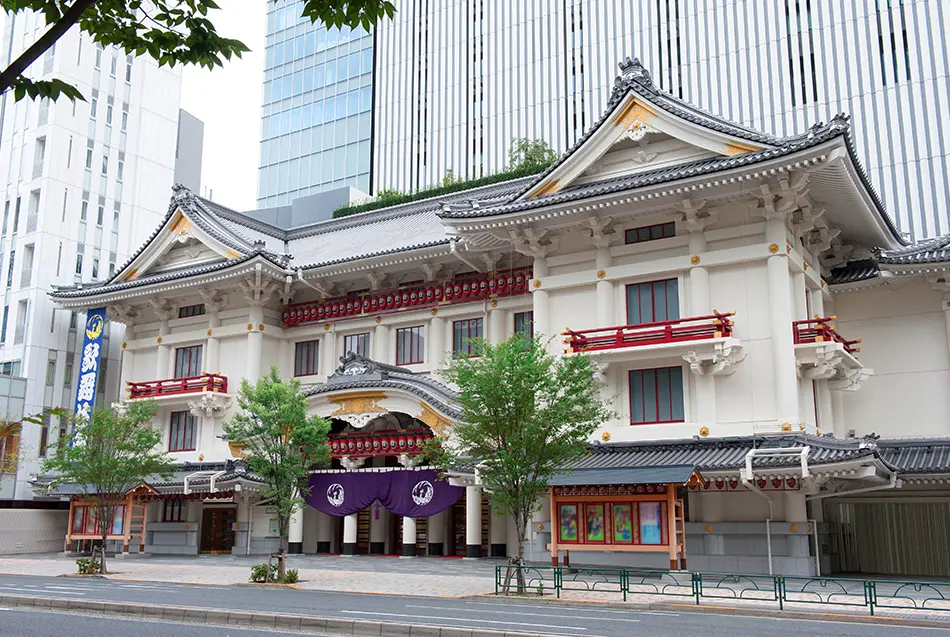
Every kabuki actor enters the stage through a elevated runway called the hanamichi that cuts directly through the audience, close enough to see the hand-painted kumadori makeup that codes each character's moral nature in bold red, indigo, and black strokes. That proximity defines the form. What is kabuki in japan begins with its founding legend: a shrine maiden named Izumo no Okuni performed satirical dances on the dry Kamo River bed in Kyoto around 1603, drawing crowds with her irreverent portrayals of samurai visiting teahouses. The Tokugawa shogunate soon banned women from the stage, and by the mid-1600s kabuki had evolved into an all-male art performed by highly trained onnagata specialists who dedicate their careers to portraying female roles with studied grace. The stylization runs deep—actors use exaggerated mie poses to freeze dramatic moments, accompanied by sharp clacks of wooden clappers, while the gidayu-bushi narrators and shamisen players sit in full view, their chanting as central as the dialogue itself. Kabukiza Theatre in Ginza has served as Tokyo's kabuki headquarters since 1889, rebuilt after war and earthquake into its current incarnation that pairs a traditional tiered auditorium with a modern tower. The venue stages full-day programs divided into two or three acts, each a self-contained story, and visitors can purchase single-act tickets to sample the form without committing to four hours. English audio guides and subtitle screens make narrative comprehension possible, though much of kabuki's power lives in its visual language—the way an onnagata manipulates a silk handkerchief, the way a hero strikes a mie with one eye crossed and every muscle locked, the way the revolving stage spins an entire set in seconds. The theatre opens at 10:00 daily, with same-day single-act tickets available at the fourth-floor counter for those willing to queue early. Traditional japanese theatre forms demand patience, but kabuki rewards attention with spectacle that bridges ritual and entertainment, a living link to Edo-period popular culture still performed by hereditary acting families who carry stage names across generations.
“The stylization runs deep—actors use exaggerated mie poses to freeze dramatic moments, accompanied by sharp clacks of wooden clappers, while the narrators and shamisen players sit in full view.”
The Kabukiza Theatre maintains a consistent schedule, operating daily to accommodate visitors interested in learning about this traditional performance art. The theatre remains open throughout the week with uniform hours.
Kabukiza Theatre ticket pricing depends on the specific performance, the duration of the play, and the seat category selected. The venue offers a flexible single-act ticket system that allows visitors to view individual portions of a program.
Verdict: An adult pays a minimum of 2,000 JPY for a single-act ticket, with total costs fluctuating based on the specific performance and chosen seat type.
The Kabukiza Theatre is located at 4-12-15 Ginza, Chuo-ku, Tokyo. It is most easily accessed directly via the Higashi-ginza Station, which connects to the theatre's basement level.
Hibiya Line to Higashi-ginza Station (Exit 3)
Toei Asakusa Line to Higashi-ginza Station (Exit 3)
Ginza Line to Ginza Station
Follow the signs for Exit 3 within Higashi-ginza Station to reach the theatre entrance directly without needing to walk outside at street level.
The best arrival window for Kabukiza Theatre is 10:00–16:00 to avoid queues for same-day single-act tickets and ensure time for orientation. Arriving early within this window allows for a smoother entry experience before performances commence.
—
Mid-week visits generally offer shorter wait times for ticket processing. Arrive early to secure your preference before afternoon attendance increases.
Mild, 15°C to 23°C
The pleasant weather draws larger crowds, requiring earlier arrival to manage wait times. Bookings and arrivals should be planned well in advance.
Cool, 14°C to 21°C
These months are peak times for Kabuki programs, leading to busier lobbies. Aim for the start of the arrival window to navigate the space effectively.
Verdict: The optimal time to visit is Tuesday to Thursday between 10:00 and 12:00 during the months of April or October to balance crowd levels and performance availability.
The Kabukiza Theatre opened in 1889 as Tokyo's first Western-style playhouse dedicated to kabuki, a classical Japanese performance art that emerged in the early seventeenth century when female dancer Izumo no Okuni staged unconventional dances in Kyoto. By 1629, the Tokugawa shogunate had banned women from the stage, and all-male troupes became the enduring convention that defines what is kabuki in Japan today. The original Kabukiza building, designed by architect Kintarō Kawai, combined traditional Japanese rooflines with Western structural engineering. Fire destroyed the theatre in 1921. Architect Shinichiro Okada rebuilt it in 1924 with reinforced concrete and a monumental façade crowned by a karahafu gable, blending Momoyama-period motifs with modern fireproofing. Allied bombing leveled the structure in 1945. Reconstruction began in 1950 under architect Yoshirō Taniguchi, who retained Okada's 1924 silhouette but expanded seating capacity to over 1,800. A 2010–2013 renovation by Kengo Kuma preserved the historic façade while embedding the auditorium within a fifty-story tower, marrying heritage theater design with contemporary urban architecture. Today's visitor enters through the same ceremonial gate that framed the 1924 reopening, beneath a copper-tiled roof that echoes Edo-period castle architecture. Inside, the hanamichi runway extends from stage to rear auditorium, a spatial signature of traditional kabuki performance unchanged since the genre's formative years. The theatre operates daily, presenting both full-length productions and single-act matinees that introduce newcomers to this centuries-old dramatic tradition.
The Kabukiza Theatre opens in Ginza as Tokyo's first purpose-built kabuki playhouse with Western structural design.
Fire destroys the original wooden theatre building.
Architect Shinichiro Okada completes reconstruction in reinforced concrete with a iconic karahafu gable façade.
Allied bombing during World War II reduces the theatre to ruins.
Post-war reconstruction by Yoshirō Taniguchi reopens the Kabukiza with expanded seating.
Kengo Kuma leads a major renovation, integrating the historic façade into a modern fifty-story complex.
The restored Kabukiza reopens, continuing daily kabuki performances for contemporary audiences.
Kabuki performances observe strict theater etiquette to preserve the art form and respect performers. Photography is prohibited during acts, and silence is expected except during designated applause moments.
Everything you need to know about what is kabuki in japan
Kabuki is a classical form of Japanese dance-drama known for its elaborate costumes and stylized acting. Understanding what is kabuki in japan involves visiting the Kabukiza Theatre in Ginza, which serves as the primary venue for these performances. The theater preserves this UNESCO-recognized intangible cultural heritage through frequent productions featuring traditional makeup and musical accompaniment.
Yes, you can experience a theatrical performance in Tokyo by utilizing single-act tickets. Learning what is kabuki in japan often leads visitors to these specific options, which are available for purchase at the theater. This provides a flexible way to observe a scene from a larger play without committing to a full-length production.
There is no formal dress code required to learn what is kabuki in japan by attending a show. Most audience members wear smart-casual attire, but visitors are welcome to dress comfortably for the duration of the performance. The primary focus remains on observing the actors and the intricate stagecraft.
The entrance fee starts at 2,000 JPY for a single-act ticket. Please note that exact pricing varies depending on the specific performance and the seat category selected at the time of booking. It is helpful to check the official website for current production details.
Children are generally welcome to attend, though some performances may be lengthy for younger audience members. Parents should consider whether the narrative pace and intensity of the dramatic acting will be suitable for their children. Families often find the visual spectacle of the costumes and set changes engaging.
The best arrival window is between 10:00 and 16:00. Arriving during this period helps you avoid long queues for same-day single-act tickets and provides sufficient time to orient yourself within the facility before the curtain rises.